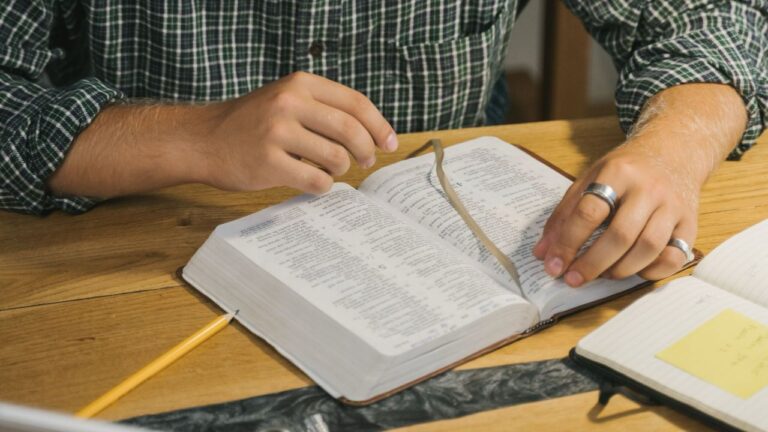
Many believers say they want a deeper relationship with God yet feel squeezed by long workdays, family demands and digital distraction. Instead of waiting for a perfect quiet retreat, they can build a simple, sustainable pattern of daily connection that fits real life. With a few intentional habits, ordinary moments like commuting, cooking or walking the dog can become steady touchpoints with God.
Shifting from “someday” to small daily choices
For many people, spiritual life has been treated like a special project that needs long stretches of silence and a flawless morning routine. That ideal can quietly discourage anyone whose schedule is messy or unpredictable. Recent Christian teaching has pushed back on this all-or-nothing mindset and encouraged believers to treat faith as something woven into the day instead of reserved for rare, perfect moments.
Writers who focus on practical discipleship describe how small, repeatable habits form a kind of “rule of life” that keeps attention on God in the middle of ordinary tasks. Simple practices such as a short prayer on waking, a verse on a phone lock screen or a nightly examen can reframe the day as shared with God rather than lived on autopilot. Resources that highlight seasonal rhythms, such as spending more time outdoors with God in warmer months, show how even leisure activities can become intentional spaces for reflection and gratitude, as seen in guidance on summer with God.
There has also been a shift toward honesty about spiritual struggle. Rather than assuming that prayer or Bible reading will always feel inspiring, pastors and writers acknowledge dry, distracted seasons and encourage perseverance. Teaching on prayer now often includes the idea that consistency itself is an act of faith, even when emotions lag behind.
Making room for God in crowded, distracted lives
Modern schedules can feel hostile to any kind of unhurried attention. Parents, for example, often report that between school runs, work and household tasks, they barely have time to sit down, let alone open a Bible. Yet practical guidance for overwhelmed parents shows that even five or ten minutes can be used well when approached with focus and realistic expectations.
Writers who address spiritual life in busy seasons recommend breaking Scripture intake into bite-size portions. Listening to an audio Bible while driving a 2018 Honda CR-V to work, reading a single psalm before scrolling notifications or taping a verse on the bathroom mirror can keep God’s word in view without demanding a full hour of study. Parents are encouraged to involve children, turning bedtime into a short family devotional rather than treating spiritual practices as one more solo task on an already long list.
Beyond family life, many Christians describe a constant sense of hurry that leaves them spiritually numb. Commentators on finding God in life’s busyness point out that hurry is not just a scheduling problem but a spiritual one, because it crowds out awareness of God’s presence. Articles on finding God in emphasize practices like setting brief pauses between meetings, walking without headphones for a few minutes or praying a simple breath prayer while waiting in line.
These approaches treat attention as a scarce resource that must be guarded. Turning off nonessential notifications, limiting late-night scrolling and choosing a consistent time for prayer or reading, even if short, can protect that resource. The goal is not a perfectly curated quiet time but a realistic pattern that can survive sick kids, shifting shifts and unexpected interruptions.
Letting simple prayer shape the flow of the day
Prayer often carries heavy expectations. Many believers feel they should pray for long stretches with flawless focus, then feel guilty when their minds wander after thirty seconds. Some teachers have tried to lower the barrier by urging people to “pray until you pray,” a phrase that captures the idea of starting with simple, honest words and staying with God long enough for the heart to catch up. Guidance that encourages people to pray until you stresses that distraction does not disqualify a person from real communion with God.
One practical way to build this into daily life is to link short prayers to routine activities. Someone might thank God for a new day when the alarm sounds, pray for co-workers while walking from the parking lot, or ask for patience before joining a video call. Over time, these micro-prayers can train the mind to turn toward God reflexively, not only in emergencies.
Another simple practice is to use written prayers, such as psalms or historic liturgies, especially when personal words feel hard to find. Keeping a small prayer book in a bag or using a smartphone app can provide a starting point during a lunch break or while sitting in a parked car. The structure of written prayers can steady attention, while the regular rhythm keeps spiritual life from depending on fluctuating emotions.
Even when time allows for longer prayer, many guides suggest starting small and being consistent. A person who commits to ten minutes of focused prayer every weekday morning may grow more over a year than someone who attempts an hour once a month and often skips it. The steady, repeated act of turning to God shapes character and expectations, even when each individual session feels ordinary.
Practical habits that keep God at the center
Writers who focus on accessible spiritual practices often highlight a handful of simple habits that can be adapted to different personalities and routines. These habits share a few traits: they are concrete, they are flexible and they are tied to existing patterns in a person’s day.
One approach is to choose a “first and last” habit. That might mean making the first words of the day a short prayer, such as “Lord, help me to walk with you today,” and ending the day with a brief review, thanking God for specific gifts and confessing where things went wrong. Over time, these bookends can frame the whole day as lived before God.
Another pattern is to attach spiritual practices to physical movement. Someone who walks a dog each evening could decide that the first ten minutes of that walk will be a time of silent reflection or spoken prayer. A commuter on a train could use noise-cancelling headphones not only for music but also for a guided Scripture meditation. Articles that offer ways to connect often suggest simple tools like journaling, worship playlists or short fasting periods from social media.
Seasonal changes can also help. Guidance on spending a summer with God encourages believers to treat vacations, barbecues and beach trips as opportunities for gratitude and service, not escapes from spiritual life. Advice on outdoor reflection points to practices like walking in nature while meditating on a psalm, or using a sunset as a cue to pray for neighbors and friends.
For families, shared rituals can anchor faith in daily routines. Eating dinner at the table without devices, reading a short Bible passage, then asking each person to share one thing they are thankful for can build a pattern of gratitude and conversation about God. Parents who already feel stretched are encouraged to keep these moments simple and repeatable rather than elaborate and sporadic.
Building a long-term rhythm of daily attention to God
As more Christians talk honestly about exhaustion, distraction and spiritual dryness, there is growing recognition that faith needs a realistic daily rhythm, not just occasional peaks. The conversation has moved from guilt-driven exhortations toward gentle, practical coaching that respects the limits of modern life while still calling people to intentional devotion.
Looking ahead, many churches and ministries are likely to keep emphasizing small, sustainable practices that can survive busy seasons. Digital tools will continue to shape how believers engage with Scripture and prayer, whether through reading plans, audio resources or simple reminders. At the same time, voices that warn about constant connectivity will keep urging people to carve out pockets of quiet, even if those pockets last only a few minutes.

Daniel Clark grew up in a family of eight brothers and three sisters and has made fitness and personal growth an important part of his life. He writes about training, health, mindset, and building better habits.